Maintenance
Irrigation Opening
Opening Cost Calculator
Check-Up / Service Call
$99
Full inspection, diagnostics, pressure testing, and system adjustments.
BOOK ONLINEUsually, the price for irrigation opening is $100 + tax. The price can vary if the system is commercial or big residential.
GET IT NOWBasically, the price for winterization is $100 + tax. The cost can vary if the system is commercial or big residential.
GET IT NOWPrices start at $550 per zone. We use Hunter and Rain Bird materials. 5-year warranty. Parts and labor are included.
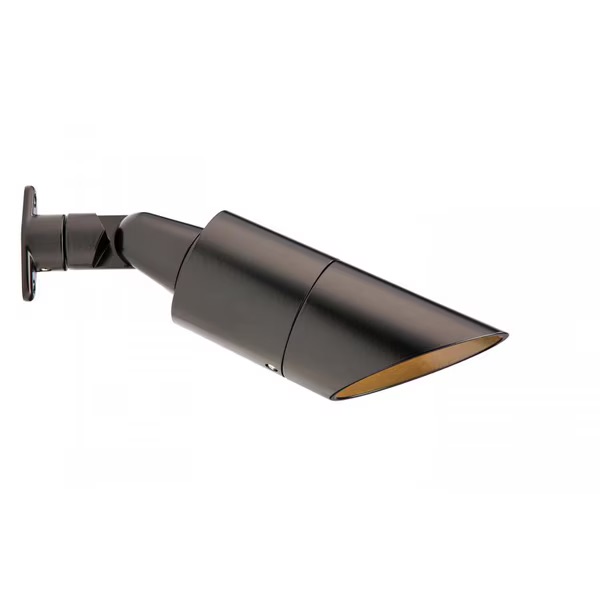
GET IT NOWLED fixtures start from $250 due to long lifespan and reduced maintenance costs. Parts & labour are included.
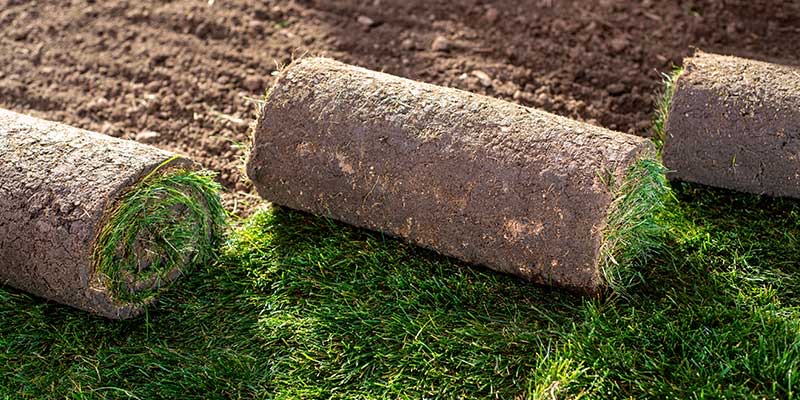
GET IT NOWResidential sod averages $1.10–$3.50 per sq.ft. Commercial starts at $0.75. Labour is included.
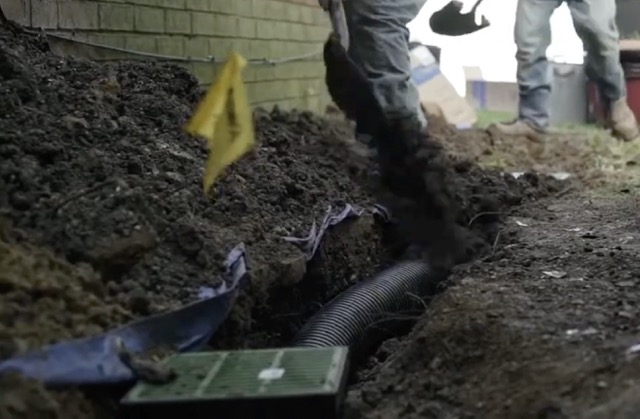
GET IT NOWFrench drainage installation cost ranges $25–$40 per foot depending on complexity. Parts and labor are included.
GET IT NOWFull inspection, diagnostics, pressure testing, and system adjustments.
BOOK ONLINE












Standing water is typically caused by three main culprits: soil compaction, poor grading, or high clay content. In Toronto and the Greater Toronto Area, many residential yards sit on “heavy clay” which acts like a waterproof bowl, preventing rain from soaking into the earth. Statistics show that nearly 60% of drainage issues in Ontario are exacerbated by improper grading where the lawn slopes toward the house rather than away from it. This is particularly dangerous in the spring when the ground is still partially frozen—the frost line hasn’t fully receded—leaving nowhere for the melting snow and heavy April rains to go except the surface of your lawn. When the soil reaches its saturation point, gravity is the only force that can move the water. If your yard lacks a 2% slope, the water remains stagnant. Over time, this standing water creates anaerobic soil conditions, essentially “suffocation” for your grass roots. Identifying whether your issue is surface-level or a high water table is the first step in a professional assessment. Without addressing the underlying soil structure or the mechanical slope of the land, surface treatments like extra seed or fertilizer will fail, as the water will continue to pool in the same low-velocity zones after every storm.
Yes, it is more than just a nuisance; it is a structural and health risk. From a structural standpoint, standing water near a foundation can lead to hydrostatic pressure, which causes basement walls to crack, bow, or leak. According to 2026 insurance industry data, the average unaddressed basement water damage claim in Ontario now exceeds $43,000. Beyond the home’s skeleton, “ponding” for more than 48 hours creates a prime breeding ground for mosquitoes, which are increasing in the GTA due to warmer, wetter springs. Furthermore, standing water causes root rot, which can destroy a mature $2,000 landscaping investment in a single season. The water displaces oxygen in the soil, killing the beneficial microbes your garden needs to thrive. There is also the risk of “ice lensing” in the late autumn; if water is trapped in the soil when the first hard frost hits, it expands, heaving your expensive stone walkways or patio pavers out of alignment. If you notice water sitting within 10 feet of your foundation for more than 24 hours, it requires immediate professional intervention to prevent long-term depreciation of your property value. A dry yard is the foundation of a healthy, safe, and valuable home investment.
The cost of professional drainage correction in 2026 varies based on the complexity of the terrain and the volume of water being redirected. For a standard-sized GTA property, comprehensive drainage projects typically range from $2,500 to $8,500. Simple regrading of a specific low spot may cost between $1,200 and $3,000, while a high-capacity French drain system averages $35 to $95 per linear foot depending on the depth required and the type of decorative aggregate used for the finish. While DIY “quick fixes” might only cost $600 in materials, industry data suggests that 45% of DIY drainage projects fail within the first two seasons due to incorrect pitch or the lack of professional-grade filter fabric, leading to even costlier professional “re-dos.” In 2026, labor costs for excavation have risen by 12% across Ontario, making it more efficient to “do it right the first time” with specialized equipment. Professional contractors use laser-transit levels to ensure a precise slope, a service that is factored into the quote but saves thousands in potential foundation repairs later. When considering the price, homeowners should view it as a “protective utility” rather than a cosmetic upgrade, as proper drainage is the only way to safeguard the structural integrity of the entire landscape and home.
A French drain is a subsurface trench system designed to redirect groundwater away from areas where it collects. It consists of a perforated pipe—usually 4-inch N-12 dual-wall HDPE—surrounded by clean, 3/4-inch crushed stone and wrapped in a non-woven geotextile filter fabric. It works by providing water a “path of least resistance.” In Toronto’s clay-heavy environment, the water seeps through the gravel, enters the perforated pipe, and is carried by gravity to a safe discharge point, such as a dry well or a storm sewer. Statistics indicate that a professionally installed French drain can move up to 5 times more water than natural soil absorption alone. In 2026, we utilize “deep-trench” technology to reach below the heavy clay layer whenever possible, ensuring the system remains functional even during heavy “1-in-50-year” storm events. The filter fabric is a critical component; without it, the fine silt and clay particles common in Southern Ontario would clog the pipe within three years. By keeping the groundwater level below the surface of the lawn, the French drain ensures your grass remains firm and usable even after a week of rain. It is the most reliable, “set-it-and-forget-it” solution for properties suffering from chronically “spongy” or “marshy” backyard conditions.
While a homeowner can handle minor surface issues, such as cleaning gutters or adding $50 downspout extensions, most structural drainage problems require heavy machinery and technical expertise. DIY projects often fail because humans are notoriously bad at “eyeballing” a 1% or 2% slope over a long distance. A mistake of just half an inch can cause water to “back up” in the pipe, creating an underground reservoir that actually worsens the problem. Furthermore, in Ontario, digging without a professional “Locate” (Ontario One Call) is illegal and dangerous, as hitting a gas line can result in fines exceeding $5,000 plus repair costs. Professional contractors in 2026 use mechanical trenchers that can dig 150 feet of perfect trench in two hours, whereas a homeowner might spend three weekends with a shovel, only to realize the soil they’ve moved has nowhere to go. Additionally, the high-quality materials required—like rigid PVC or heavy-duty HDPE—are often difficult to transport in a personal vehicle. When you factor in the cost of tool rentals, the physical toll of moving tons of gravel, and the risk of improper installation, the “savings” of DIY often disappear. Professional installation ensures the system is engineered for the specific hydraulic load of your property, providing a multi-decade solution rather than a temporary patch.
In the GTA, clay soil requires a multi-pronged approach because the soil itself is nearly non-porous. The most effective strategy combines French drains, catch basins, and soil amendment. Catch basins are essentially underground “collection boxes” with a grate on top that capture surface water instantly and pipe it away before it can soak into the clay. For homeowners looking for an eco-friendly option in 2026, a Rain Garden—a bowl-shaped area planted with native Ontario species like Red Osier Dogwood or Blue Flag Iris—can increase water absorption by 30% to 40% compared to a standard turf lawn. Another trending 2026 solution is core aeration followed by sand-topdressing, which manually introduces pores into the clay to help it “breathe.” However, for major pooling, the mechanical removal of water is king. We often recommend a “hybrid system”: a French drain to manage the underground “sponge” effect and a series of catch basins to handle the “sheet flow” coming off the roof and patio. By tackling the water from both above and below, you ensure that even the heaviest “spring thaw” won’t turn your backyard into a lake. This comprehensive approach is necessary in regions like Vaughan and Richmond Hill, where new construction has heavily compacted the sub-soil.
Regrading involves reshaping the land’s surface to ensure gravity carries water away from your foundation and toward a safe exit point, such as a street or a designated “swale.” Professionals use laser-leveling technology to establish a “positive grade,” meaning the ground drops at least one inch for every four feet of distance from the house. In 2026, the average cost for professional regrading in a standard GTA backyard is $1,800 to $4,800. The process starts with removing the existing sod, then using a skid-steer or mini-excavator to re-contour the subsoil. We then add a high-quality “triple-mix” topsoil to ensure new grass can thrive. According to landscape engineering standards, a properly graded yard is the single most important factor in basement flood prevention. Many Toronto homes built in the mid-20th century have “settled” over time, leading to “negative grading” where the yard actually slants toward the basement windows. Regrading corrects this permanent structural flaw. While it is a more invasive process than installing a simple pipe, it addresses the root cause of the problem rather than just the symptoms. Once the new sod is laid and established, the result is a perfectly flat-looking (but functionally sloped) lawn that stays dry and firm regardless of the weather.
A dry well is an underground structural chamber—often a large plastic barrel with perforated sides—that stores excess runoff and allows it to slowly dissipate into the surrounding soil. They are excellent for managing roof runoff from downspouts. However, in heavy clay areas like North York or Markham, a dry well may “fill up” and stay full because the surrounding clay won’t let the water out fast enough. A typical 50-gallon dry well installation in 2026 costs between $1,600 and $3,800. We only recommend these after performing a percolation test (checking how fast water drains out of a test hole) to prove your soil can actually “drain” the well within 24 hours. In 2026, many GTA municipalities are encouraging the use of “soakaway pits” to reduce the strain on the city’s storm sewer system. If your soil is sandy or loamy, a dry well is a brilliant, eco-friendly way to recharge the local water table. However, if you are sitting on “blue clay,” a dry well will simply become an underground puddle. In those cases, we redirect the overflow to a lower part of the property or a curb-side discharge. Understanding the “hydro-geology” of your specific street is vital before burying a dry well, as an improperly placed one can eventually collapse or cause localized soil erosion.
The choice between these two systems depends on where the water is coming from. French drains are “stealth” systems designed for “mushy” grass and groundwater that seeps up from below; they are hidden under turf or decorative stone. If your lawn feels like a sponge days after a rain, you need a French drain. Trench drains (also called channel drains) feature a long, visible metal or plastic grate and are designed to catch “sheet flow” water running off hard surfaces like driveways, pool decks, or patios. In 2026, trench drain installation is slightly more expensive, averaging $60 to $130 per linear foot, because it often involves cutting through existing concrete or asphalt with a diamond-blade saw. Statistics from GTA property inspections show that 30% of garage flooding is caused by a lack of a trench drain at the mouth of a sloped driveway. While a French drain “sucks” water from the soil, a trench drain “intercepts” water before it can reach your garage or basement door. For the ultimate protection, many 2026 landscape designs incorporate both: a trench drain to protect the hardscape and a French drain to protect the softscape (the lawn). Choosing the wrong one is like using a vacuum to clean a window—it’s the wrong tool for the medium.
Lawn aeration—the process of pulling thousands of small “plugs” of soil out of the ground—is a fantastic maintenance tool, but it is rarely a “fix” for significant standing water. It costs roughly $175 to $350 for a professional service in the GTA. While it successfully reduces surface compaction and helps oxygen reach grass roots, it cannot overcome a major grading issue or a high water table. If your water disappears within 3-4 hours after a storm, aeration might be all you need to help the surface “breath.” However, if the water stays for 24-48 hours, you have a structural drainage problem that no amount of aeration can solve. In 2026, we often use aeration as a “supportive treatment” after a French drain has been installed to help the surrounding soil recover its health. Think of aeration as “poking holes in a sponge”; it only works if the sponge isn’t already sitting in a bucket of water. If the water has nowhere to go because of a slope issue, the holes created by aeration will simply fill with water and stay that way. For Toronto homeowners, we recommend annual aeration to prevent future compaction, but we urge caution against expecting it to solve a major “pond” in the middle of the backyard.
A swale is a shallow, wide, and gently sloped ditch lined with grass or rocks that acts as a natural highway for water. It is one of the most cost-effective drainage solutions available in 2026, often costing only $15 to $30 per linear foot to excavate and turf. Swales are highly effective for large properties in the GTA where you need to move vast volumes of water long distances without the expense of hundreds of feet of underground PVC piping. However, they require enough space to maintain a gentle, mowable slope so they don’t become a “moat” or a safety hazard. A “Bioswale” is a 2026 variation that uses specific plants and organic matter to filter pollutants from the water as it moves. While pipes are hidden, swales are visible parts of your landscape design. If not designed correctly, a swale can become a muddy mess; but when lined with river rock (a “Dry Creek Bed”), it becomes a stunning aesthetic feature. Statistics show that properties with natural swales handle “flash floods” better than those relying solely on 4-inch pipes, simply because the swale can hold more volume during a peak downpour. They are the perfect solution for directing water between two neighboring houses where space is tight but a slope is available.
Generally, the answer is no. Standard homeowners insurance policies in Ontario cover “sudden and accidental” water damage—like a burst pipe or a sudden roof failure—but they rarely cover “gradual” or “predictable” issues like poor yard drainage or surface seepage. In fact, in 2026, insurance adjusters are becoming stricter; if they find that your basement flooded because you ignored a known “pond” in your yard, they may deny your claim based on a “lack of maintenance” clause. Investing $4,000 in a drainage system today is essentially an “insurance policy” against a $45,000 basement restoration disaster. Furthermore, having a professional drainage system installed can actually increase your home’s resale value and make it easier to get “Sewer Backup” or “Overland Water” endorsements on your policy. Some GTA homeowners have reported that providing proof of professional drainage work helped lower their annual premiums by 5-10%, as it significantly lowered the risk profile of the property. It is always cheaper to manage water on the surface than it is to pump it out of your basement. In 2026, being “proactive” with your yard is the only way to ensure your most valuable asset remains insurable in an era of increasingly volatile weather patterns.
Most residential drainage projects in the Toronto area can be completed in 1 to 4 days, depending on the weather and the scale of excavation. A simple downspout burial and catch basin installation often takes only a few hours. A full-perimeter French drain system involving the removal of 10 tons of soil and the delivery of 15 tons of gravel typically takes 2-3 days. The benefit of professional installation in 2026 is the use of specialized, low-impact machinery like mini-skid steers with “turf tires,” which can move heavy loads across your lawn without destroying the healthy grass. Homeowners who try to dig by hand often find themselves still working three weeks later, as the physical labor of moving “wet clay” is immense—one cubic yard of wet clay can weigh over 3,000 pounds. Speed is especially crucial in the spring (March-May) because you want the system operational before the “monsoon” rains of early June. Our goal is always “minimal disruption.” By using trench-shielding and plywood runways, we can complete a major installation and have your yard looking nearly untouched within a week of the project finishing. Efficiency in 2026 is not just about speed; it’s about using the right tech to ensure the yard is stabilized before the next storm cycle hits.
Modern 2026 drainage techniques are designed to be “invisible” or “aesthetic.” For a standard French drain, we carefully “cut and peel” the existing sod, store it on tarps, and replace it once the trench is backfilled. Within 14 to 21 days, the “scar” is usually invisible. For homeowners who want to turn a problem into a feature, we recommend a Dry Creek Bed. This involves lining the drainage path with a mix of river rocks, pea gravel, and larger “accent” boulders. It looks like a natural, dry stream during the summer, but during a storm, it becomes a high-capacity water highway. This adds “curb appeal” value to your home while solving the functional issue. According to Toronto real estate trends, “functional landscaping” (landscaping that solves a problem) provides a higher return on investment than purely decorative work. We also use “pop-up emitters” for the end of the pipes, which stay flush with the grass so you can mow right over them, only opening up when water pressure pushes them up. Gone are the days of ugly green pipes sticking out of the middle of your lawn. In 2026, a great drainage system is one that your neighbors don’t even know exists—until they see your lawn is dry while theirs is a swamp.
If you already have a system but still see standing water, it is likely failing due to silt buildup, root intrusion, or pipe collapse. Many older Toronto homes were fitted with “corrugated” black plastic pipes—the cheap, thin-walled kind—which are notorious for collapsing under the weight of the soil after 10-15 years. In 2026, we utilize rigid PVC (SDR-35)or dual-wall HDPE pipes which have a lifespan of 50+ years and are much easier to clean. Signs of failure include “sinkholes” forming over the pipe line or water “bubbling up” from the ground during a rain. A professional camera inspection in 2026 (costing about $350-$550) can pinpoint exactly where a blockage or break is without having to dig up your entire yard. Often, a system fails because it was installed without a “cleanout” port, making maintenance impossible. Statistics show that 20% of drainage failures in the GTA are caused by tree roots seeking the water inside the pipe. If you have large maples or oaks near your lines, you need a “closed” system in those areas. Regular maintenance, such as flushing the lines with a high-pressure hose every 3-5 years, can prevent a total system failure and extend the life of your investment indefinitely.