
















The Sprinkler Company Inc. / Wet yard troubleshooting
Standing Water After Rain: Causes and Next Steps
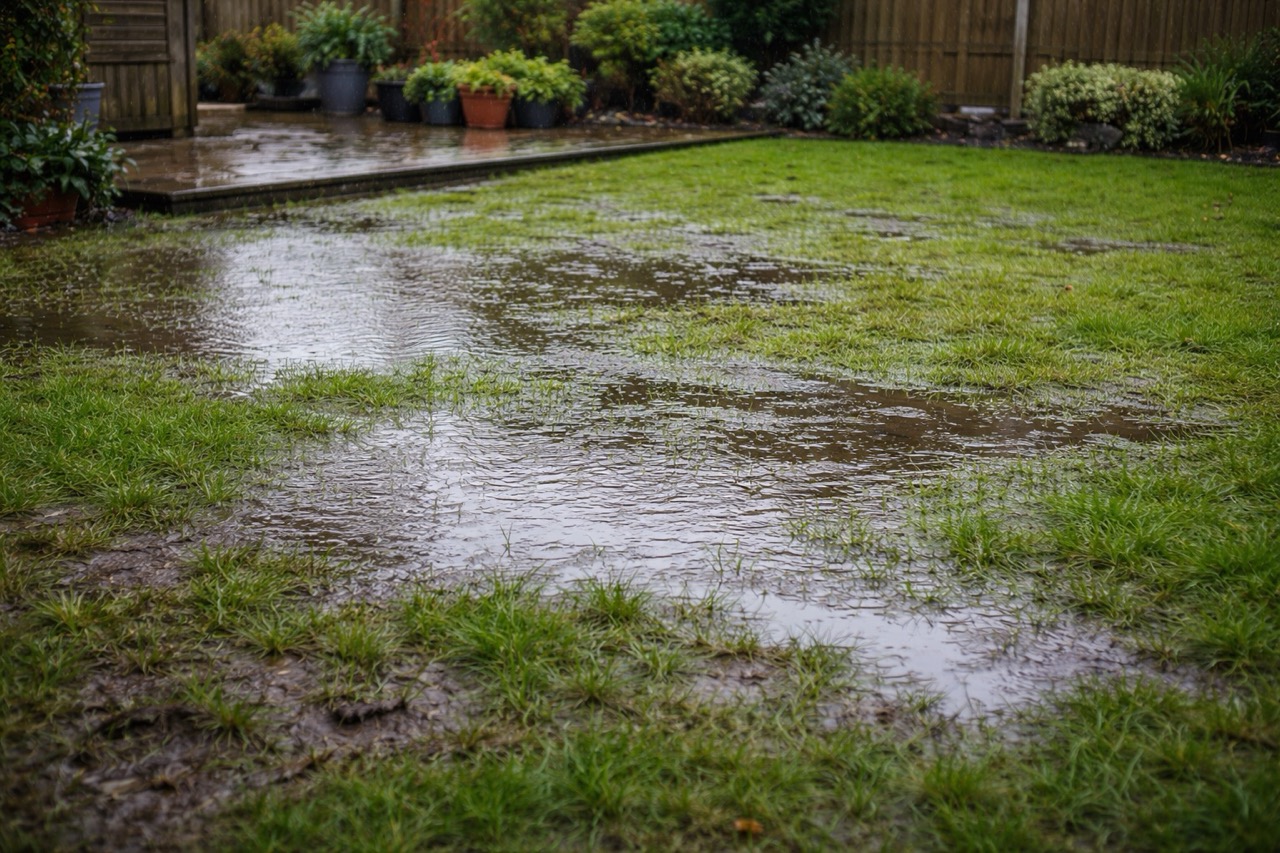
Standing water after rain can come from a low spot, compacted soil or concentrated runoff. Record where it collects, how deep it is and how long it remains before choosing a yard drainage repair.
Standing Water After Rain: the direct answer
Record the location, depth and duration of ponding before choosing a remedy. A low spot, compacted soil and concentrated roof runoff can produce similar puddles.
Photograph the same area after the rain and again as it drains. Include a ruler in the image when it can be done safely. Note whether neighbouring surfaces feed the spot and whether irrigation ran. A repair should address the source and destination, not only cover the visible water with topsoil. Indoor water entry or unstable ground needs professional attention beyond a lawn checklist.
Standing-water next-step finder
Suggested next steps based on your answers; not an on-site diagnosis. NDS drainage maintenance
Observe the event before paying for a remedy
A wet patch can result from rainfall, irrigation, a roof discharge, a low spot or a damaged service. The same appearance does not establish the same cause. Photograph the area from a fixed position and note whether it is changing while irrigation is off. If there is water inside a building, sewage, electrical danger or active erosion, treat that as a separate urgent problem.
Avoid walking on saturated ground or near electrical equipment to obtain a measurement.
Technical reference: NDS: French drain installation guidance; City of Toronto: downspout disconnection; Ontario Dig Authority: locate information. Site-specific product instructions and local requirements take precedence over an illustrative calculation.
Separate event timing from persistence
Record when rainfall ended and whether the visible water is shrinking, moving or being replenished. Keep irrigation operation in the same notes. There is no need to invent a precise infiltration rate from a casual photograph. A sequence of observations is more useful than an unsupported conclusion that every puddle requires the same drain installation.
Build a useful record of the wet area
The timing of wetness often tells more than a photograph of a puddle alone. Note whether water appears during rainfall, after irrigation, during thawing weather or on otherwise dry days. Photograph from the same safe position and include nearby downspouts, paths and changes in level. A simple sketch showing the direction of surface movement can help a contractor distinguish the source from the place where water finally accumulates. Record observations rather than declaring a diagnosis before the site has been inspected.
Separate what is visible from what is only suspected. A damp strip along a fence does not prove the neighbour caused it, and an unusually green patch does not prove a buried leak. Surface shape, shade, irrigation coverage and subsurface conditions can overlap. If water is entering a building, smells like sewage or is near electrical equipment, treat that as a separate urgent concern. Do not enter a chamber, excavation or flooded area to collect more information for a landscaping estimate.
Check collection, conveyance and discharge separately
A drainage system can have a problem at any of three stages. Water may not reach the intended collection point, the connecting route may be restricted, or the discharge destination may be unable to receive it. Look at accessible surface features first. Leaves across a grate are different from a pipe profile problem below ground. Water beside a patio may reflect the surface level rather than a blockage. Keeping these possibilities separate helps prevent the wrong repair from being selected simply because it is familiar.
Inspect exposed features only where they can be reached safely from the surface. Do not remove a heavy cover or climb into a basin. Photograph accessible debris and the surrounding levels, then ask the appropriate contractor what inspection is needed. A basin is a collection point, not an unlimited storage tank. Even a clear inlet cannot resolve a blocked or unsuitable downstream route. Conversely, replacing the entire pipe may not help if the finished lawn directs runoff somewhere other than the inlet.
Choose the repair only after identifying the cause
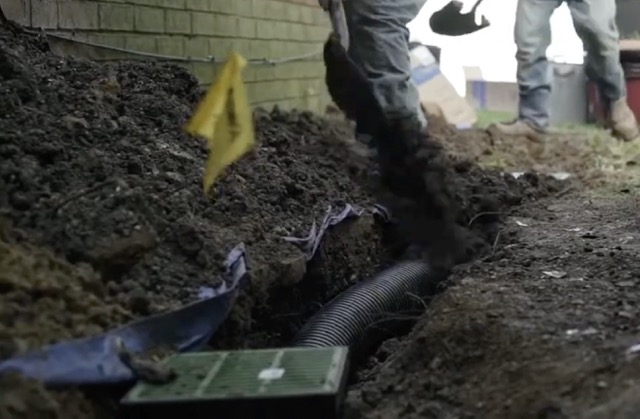
Regrading, a surface inlet, a French drain and an irrigation repair solve different problems. Grading changes the surface route; a French drain collects water within its drainage zone; an inlet captures surface flow; and irrigation work addresses the watering equipment. Some properties need a combination, but a combination should be explained rather than automatically proposed. Ask which observed symptom each work item addresses and what condition would remain outside the scope.
A repair proposal should also describe what happens to disturbed surfaces. Digging across a lawn, garden bed or interlocking path creates restoration work that can be significant even when the repaired component is small. Compare quotes on the same reinstatement standard and keep unrelated cosmetic upgrades separate. For an existing system, photographs or records from its installation can help locate the route. Finding those records before excavation may save unnecessary investigation without assuming that the original installation was correct.
Confirm the result and watch for a changed water path
After work is complete, revisit the observations that triggered the repair. Compare similar weather conditions where practical and check whether water has moved to another vulnerable location. A newly dry patch is not the only measure of success if runoff now reaches a doorway or neighbouring property. Ask the contractor what ordinary maintenance is expected and which symptoms warrant a return inspection. Keep the final route and any accessible service points in the property records.
Landscape changes can alter drainage later. Added soil, a new fence base, a patio extension or a layer of mulch can interrupt a previously open surface route. Irrigation settings can also change how wet the ground stays between storms. When a problem returns, record the recent changes instead of assuming the same component has failed again. A clear history gives the next inspection a better starting point and helps distinguish maintenance needs from a change in the way the yard is being used.
Prepare an inspection request that describes the symptom
A useful request names the location, timing and effect of the water problem. Explain whether the area is inconveniently soft, whether water reaches a structure, or whether erosion is removing soil. Those consequences lead to different priorities. Include photographs taken from safe positions and any known history of drainage or irrigation work. Avoid removing fittings or opening buried services simply to make the initial request more detailed; the inspection should determine what investigation is appropriate.
Keep observations and assumptions separate. Seeing water near a downspout is an observation; deciding that a buried pipe has collapsed is an interpretation that may need evidence. Similarly, a wet patch beside an irrigation head does not establish whether the head, connecting pipe, controller settings or surrounding grade is responsible. Describe what changes when the watering system is off and what happens after rain. Clear observations help the contractor choose a more focused inspection.
Ask how the proposed repair will be evaluated once completed. The appropriate check depends on the component and site, but it should relate to the original symptom rather than only the appearance of the finished lawn. A basin repair may involve checking accessible connections; a grading repair needs attention to the surface route; an irrigation repair needs a relevant operational check. Have the responsible contractor explain the limits of the check and any conditions that cannot be reproduced during the visit.
Afterward, retain the inspection findings even if the chosen solution is small. A future recurrence may involve a new cause, and previous records can prevent repeating work that was already investigated. Note significant changes such as a new patio, extra soil or altered watering settings. Where water affects a building, electrical equipment or an unstable area, use the appropriate professional response instead of waiting for a routine landscaping visit. The aim is to diagnose the problem at the right level, not to prescribe the same drain to every property.
Turn the symptoms into a practical next step
Record what can be seen safely, the conditions at the time and the location of each observation. A dated photograph taken from a repeatable position is often more useful than an unsupported diagnosis. Separate a symptom from its suspected cause: water at a low point, an exposed root flare or a blocked visible grate are observations; the reason behind them may require inspection. Note recent changes such as new paving, altered irrigation or added soil.
Do not enter a trench, drain chamber or unstable area to investigate a symptom. Do not disturb buried services or remove heavy covers without appropriate assistance. A suggested next step helps narrow the work to investigate, not a safety approval or a substitute for professional assessment. If there is active building damage, sewage, electrical danger or a structural concern, deal with that issue separately rather than treating it as an ordinary landscape-planning question.
Bring the observations together with any existing installation drawings, product information and previous work records. Ask the contractor which findings influence the proposed scope and what remains uncertain. The price table gives relevant service references, but a diagnosis should determine the work rather than the reverse. After completion, keep the updated records and compare the original symptoms with later conditions. This provides a clearer basis for maintenance or follow-up than starting again with no record of what changed.
Typical yard drainage project prices
Published prices for the relevant service or material are listed below. These are price ranges or supplier listings, not a calculated market average. Check the included work, delivery and applicable tax when comparing quotes.
| Service or material | Price (CAD) | Scope and source |
|---|---|---|
| Small pipe or basin repair | $1,500-$4,000+ | Short, localised drainage project. Backyard drainage project prices |
| Typical backyard drainage system | $4,000-$9,000+ | Drainage and restoration. Backyard drainage project prices |
| Large multi-part drainage project | $10,000-$20,000+ | Several repairs or extensive work. Backyard drainage project prices |
Prices checked 2026-10-06. Unless stated otherwise, prices exclude tax. Supplier pickup prices exclude delivery and installation. Ontario HST is 13% where applicable.
Questions and factual answers
Can a wet patch identify the cause by itself?
No. Rainfall, irrigation, a low point or leaking services can create similar symptoms. Record weather, watering and the timing of wetness, then investigate the source.
How much water is in a shallow puddle?
A 2 m2 puddle with a uniform 10 mm depth contains 20 litres. An irregular puddle needs an estimated average depth, not just its deepest measurement.
What is the main limit of this planning tool?
Suggested next steps based on your answers; not an on-site diagnosis.
What should be confirmed before work starts?
Avoid walking on saturated ground or near electrical equipment to obtain a measurement. Ask for the measured scope, materials, destination of water or removed material where relevant, and any exclusions in writing.
Related planning guides
Sources and scope
The calculations are transparent planning scenarios, not a drainage design, structural assessment or binding quote. Current local rules, product instructions and a site inspection may change the appropriate scope.
Discuss your property and measured scope
The Sprinkler Company Inc.