


















The Sprinkler Company Inc. / Downspout Drainage Solutions
Downspout Drainage Away from the House
A downspout carries roof runoff from a gutter to a discharge or collection point.
Downspout Drainage Solutions: the direct answer
Direct roof water to an appropriate area away from the building without creating a hazard or sending it onto neighbouring property. Toronto has specific disconnection guidance and exemptions.
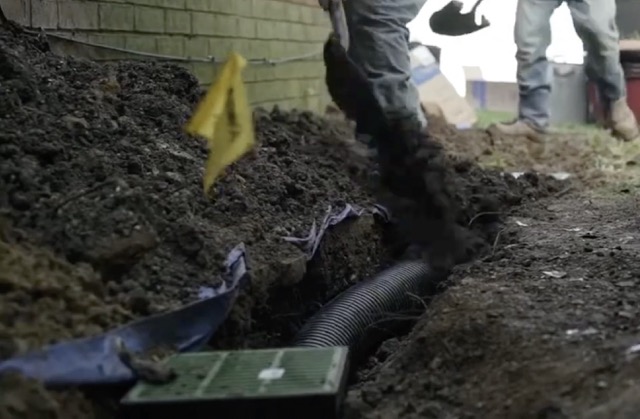
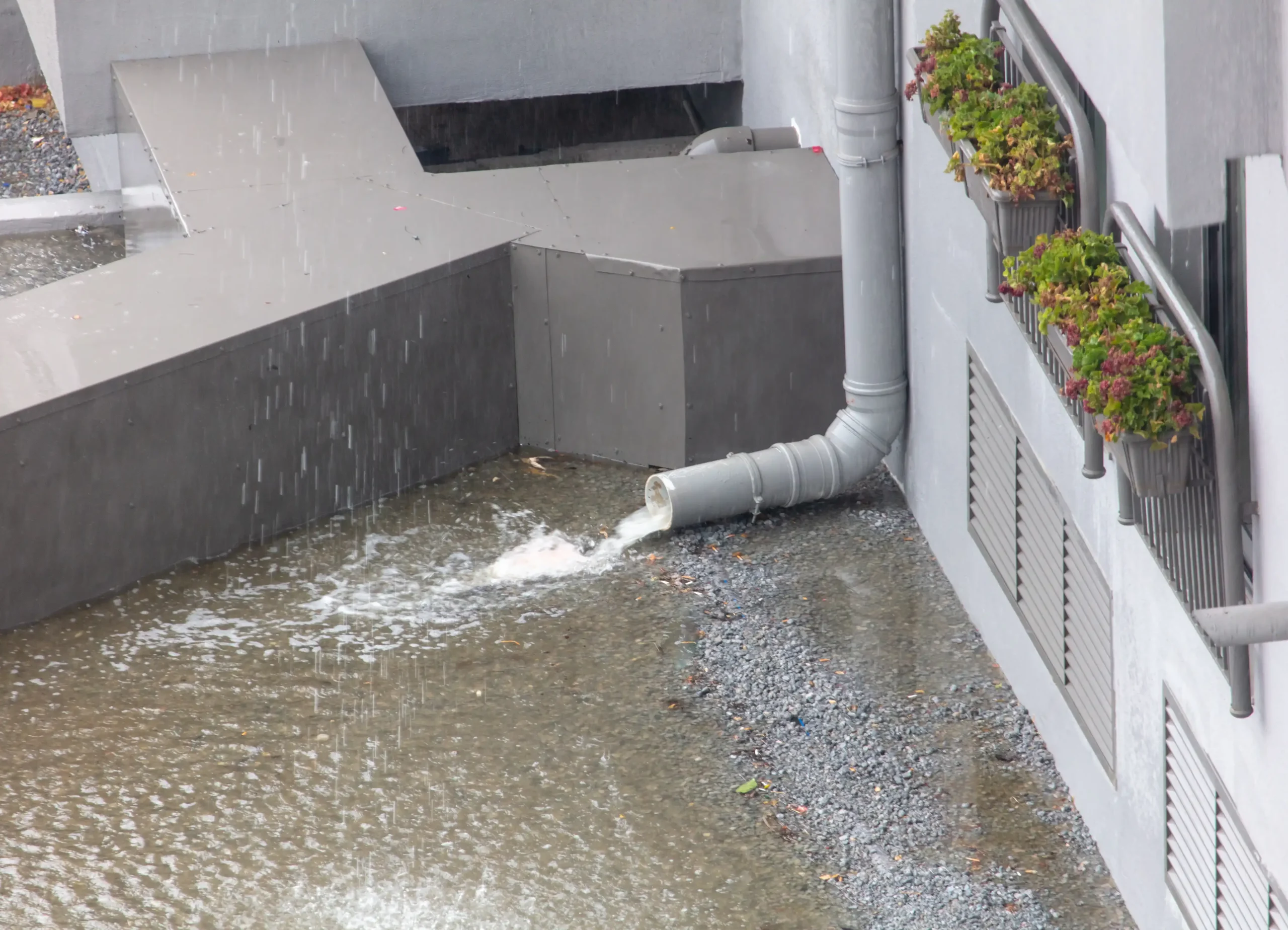
Trace the route during ordinary rain from a safe position. An extension should not end in a depression that sends water back toward the house. Check the condition of gutters as well as the outlet, since overflow at roof level may bypass the intended route. If a buried line is proposed, identify its destination and service access before covering it.
Water volume calculator
Volume only. Does not size pipes, measure infiltration or prescribe watering. For gross rainfall leave the fraction at 100%.
Litres = area (m2) x depth (mm) x collected fraction.
Plan the overflow as carefully as the storage
Storage fills. A barrel, planted depression or subsurface chamber therefore needs a safe path for excess water. A volume calculation is useful for comparing scenarios, but it does not establish infiltration performance, pipe capacity or permission to discharge. Toronto guidance applies within Toronto; confirm requirements with the municipality responsible for the property.
Use horizontal contributing roof area for the simple rainfall-volume calculation.
Technical reference: City of Toronto: downspout disconnection; TRCA: rain garden planning and maintenance. Site-specific product instructions and local requirements take precedence over an illustrative calculation.
Check the downspout destination before extending it
An extension should move water to an appropriate receiving area without introducing a trip hazard or directing it toward another vulnerable point. The useful distance depends on site conditions and applicable local guidance, not just the length of the purchased part. Identify the route after the extension ends. Otherwise, the work may simply shift concentrated runoff from one small location to another.
Measure the area that actually sends water to the feature
A roof catchment is the area draining to a particular downspout, not automatically the entire roof. Gutters, roof valleys and the arrangement of downspouts divide the collection area. Paved surfaces can add another contribution if their slope directs runoff to the same place. Start with a sketch that identifies these connections. An estimate based only on the size of the proposed rain garden or barrel misses the upstream water that the feature is being asked to receive.
Rainfall depth and contributing area provide a useful first volume calculation. One millimetre of rain over one square metre equals one litre before losses. This relationship is a geometric fact, not a prediction that every litre reaches storage. Some water is retained, diverted or absorbed along the route. Rainfall also arrives over time, so total volume does not describe the highest flow rate. Keep the volume calculation separate from selecting a pipe size or claiming that a feature handles a particular storm.
Separate storage capacity from infiltration performance
A barrel holds water in a container. In contrast, a rain garden temporarily receives water within a planted landscape feature and relies on a suitable design for drainage and overflow. Dry wells place storage below ground. These options are not interchangeable simply because all involve rainwater. Soil conditions, groundwater, nearby foundations, utilities and available space influence which arrangement is appropriate. A wet hollow beside a house should not be relabelled as a rain garden without assessing those constraints.
Available capacity is also different from a product nominal size. A barrel that is partly full has less room for the next rain. Excavation volume is not the same as usable underground storage when stone or structural components occupy part of the space. For a planted feature, the relationship between surface storage, soil and the outlet must be established for the site. Making a depression deeper does not by itself prove that it will empty appropriately or protect nearby structures.
Give excess water a safe route
Every storage arrangement needs a plan for water that exceeds its available capacity. Identify the overflow path before placing a barrel or shaping a bed. Consider the relationship to doors, window wells, paths and neighbouring land. The intended destination must be suitable and consistent with local requirements. Toronto downspout guidance applies within Toronto; properties in other municipalities need the corresponding local direction. A neighbouring drainage connection should never be assumed available just because it is close.
The overflow should remain functional when the feature is already full. For a barrel, follow the manufacturer requirements for the connection and stable support. For a rain garden or infiltration feature, the designer should identify how larger flows bypass or leave it. Keep this route visible in the plans and accessible after planting. A dense plant, an edging strip or a later soil addition can unintentionally interrupt the very path needed when storage reaches its limit.
Price planting, earthwork and equipment as different scopes
Rainwater projects can involve a purchased container, excavation, soil preparation, plants or buried drainage, depending on the design. A barrel retail price is not a rain-garden installation price, and a garden planting rate does not include engineering an infiltration system. Compare the work actually proposed. Useful quote details include the measured collection area, intended feature dimensions, plant sizes, soil specification and the treatment of overflow. Ask which parts are included rather than combining unrelated prices into a supposed standard package.
After installation, keep inlets and overflow routes free of accessible debris and follow the supplied maintenance instructions. Establishing plants still need appropriate care even when their purpose is to manage rainwater. Record persistent ponding, erosion or unexpected wetness and discuss it with the installer rather than adding more soil or a stronger pump without assessment. A functioning rainwater feature should fit the whole property drainage arrangement, not just look attractive in the section of garden visible from the house.
Check that a rainwater feature remains usable through the year
A proposed rainwater feature should be reviewed in relation to ordinary garden use. Consider how people reach a tap, gate or path when the area is wet and where maintenance access will remain after plants mature. A container also needs a location that suits its manufacturer support and connection requirements. Do not place equipment solely where it is easiest to hide. The route of incoming water and the destination of overflow are more important than concealment.
For a planted feature, ask for a planting schedule that reflects the actual conditions within the design. The wettest part and the upper edge may not provide the same growing conditions. Mature plant dimensions affect access to inlets and the visibility of overflow routes. A generic collection of moisture-loving plants is not a substitute for understanding how long different parts of the feature are expected to remain wet. Establishment care should be explained separately from the long-term drainage function.
Seasonal maintenance and the final quote
Seasonal maintenance depends on the product and arrangement. Follow the barrel manufacturer guidance for freezing conditions and retain that guidance with the equipment record. For planted features, ask how debris, sediment and plant growth should be managed without damaging the intended profile. Avoid changing the depth or blocking a visible overflow in pursuit of a tidier appearance. Where a feature stays wet unexpectedly, record the conditions and ask for an assessment of the soil, inlet and outlet rather than guessing at a remedy.
The final quote should describe the completed outcome: the collection route, feature dimensions, supplied equipment or plants, overflow and disturbed-surface restoration. If only a component is being installed, name that limitation. A supplier barrel price and a garden planting rate remain useful comparison points, but neither represents a complete rainwater-management design. This distinction allows a homeowner to discuss costs honestly while still obtaining a clear description of what the proposed project will do and which conditions require further investigation.
Understand what a water-volume result can tell you
Begin with the area that contributes water to the feature being considered. For roof runoff, follow the gutter and downspout arrangement rather than automatically entering the entire roof. If you are measuring paving, identify the surface that drains toward the collection point. For an applied watering depth, use the area receiving that application. These distinctions matter because changing the contributing area changes the calculated volume directly, even when the rainfall or watering depth remains identical.
One millimetre across one square metre corresponds to one litre. The relationship is useful for comparing collection scenarios and understanding why a small storage container can fill quickly. A collected fraction can describe an assumption about losses, but it is not a measured soil infiltration rate. Keep the assumption visible and do not adjust it simply to make a proposed feature appear sufficient. Actual collection depends on the route, surface and conditions during the event.
Volume is not peak flow. The same amount of water arriving in a short intense burst and over a long period can place different demands on an inlet or pipe. Rain-garden suitability also depends on soil, location and overflow, while irrigation decisions depend on plant and root-zone conditions. Use the result to ask better questions about the site, not to certify flood protection or select equipment without the additional design information. Record the area and depth used alongside the result.
Typical yard drainage project prices
Published prices for the relevant service or material are listed below. These are price ranges or supplier listings, not a calculated market average. Check the included work, delivery and applicable tax when comparing quotes.
| Service or material | Price (CAD) | Scope and source |
|---|---|---|
| Small pipe or basin repair | $1,500-$4,000+ | Short, localised drainage project. Backyard drainage project prices |
| Typical backyard drainage system | $4,000-$9,000+ | Drainage and restoration. Backyard drainage project prices |
| Large multi-part drainage project | $10,000-$20,000+ | Several repairs or extensive work. Backyard drainage project prices |
Prices checked 2026-10-06. Unless stated otherwise, prices exclude tax. Supplier pickup prices exclude delivery and installation. Ontario HST is 13% where applicable.
Questions and factual answers
Does storage remove the need for an overflow?
No. A 200 litre container already holding 150 litres has only 50 litres free. Water beyond the free capacity needs another safe route.
Can I use rainfall volume to choose pipe diameter?
No. Volume alone omits rainfall timing and peak flow. Outlet conditions, pipe profile and applicable design criteria also matter.
What is the main limit of this planning tool?
Volume only. Does not size pipes, measure infiltration or prescribe watering. For gross rainfall leave the fraction at 100%. Litres = area (m2) x depth (mm) x collected fraction.
What should be confirmed before work starts?
Use horizontal contributing roof area for the simple rainfall-volume calculation. Ask for the measured scope, materials, destination of water or removed material where relevant, and any exclusions in writing.
Related planning guides
Sources and scope
The calculations are transparent planning scenarios, not a drainage design, structural assessment or binding quote. Current local rules, product instructions and a site inspection may change the appropriate scope.
Discuss your property and measured scope
The Sprinkler Company Inc.