If you are looking to make a great investment in your lawn and garden, an irrigation system would be it. However, just like any other system that operates under pressure, underground, and is used frequently, it is susceptible to problems gradually. A leak or a malfunction that you’ve been ignoring for a while and finally breaks in a costly repair is what you might end up with – especially in Toronto, where clay soil, freezing winters, and water pressure fluctuations make the damage faster.
Top 7 Signs Your Irrigation System Needs Repair — Before It Gets Expensive
If you are looking to make a great investment in your lawn and garden, an irrigation system would be it. However, just like any other system that operates under pressure, underground, and is used frequently, it is susceptible to problems gradually. A leak or a malfunction that you’ve been ignoring for a while and finally breaks in a costly repair is what you might end up with – especially in Toronto, where clay soil, freezing winters, and water pressure fluctuations make the damage faster.
Here are the 7 most frequent instances when your irrigation system requires fixing and what the local homeowners in Toronto should be thinking about to avoid costly issues.
1. Uneven Watering or Dry Patches on the Lawn
2. Low Water Pressure Across Multiple Zones
3. Sprinkler Heads Not Popping Up Fully
4. Water Pooling or Soggy Spots in the Yard
5. Higher-Than-Normal Water Bills
6. Zones That Don’t Turn On (or Won’t Shut Off)
7. Sprinkler Heads Spraying in the Wrong Direction
1. Uneven Watering or Dry Patches on the Lawn
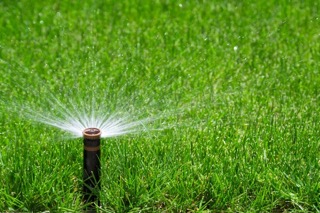
Uneven watering and dry patches that appear on a lawn are probably the earliest and most definite signs that an irrigation system needs to be fixed. In fact, it is assumed that every sprinkler head of a properly functioning system is calibrated to deliver uniform precipitation over the entire zone – usually from 1.5 to 2.0 inches of water per week during summer months of Toronto. As a result, the brown or dry spots that remain may represent the precipitation rate of that zone that has become inconsistent. Some of the most frequent reasons are clogged nozzles that limit the flow; misaligned spray patterns that redirect the water away from the intended area; sunken sprinkler heads that reduce the spray height; and blocked spray paths, which are caused by the growth of plants or the presence of hard structures, that close the area where the water would normally come from.
The clay-heavy soil of Toronto also causes uneven absorption, which means that any slight disruption in distribution becomes visible very quickly. If the issue is neglected, the grass in these areas may suffer from root dehydration, thus they will be in need of costly overseeding or full sod replacement. At the time when the adjustment or head replacement is carried out, it stops the damage from going further and the uniform coverage is being restored again.
2. Low Water Pressure Across Multiple Zones
A significant reduction in water pressure in several irrigation zones should immediately make you think of a mechanical or hydraulic problem that is beyond the surface. Typically, residential sprinkler systems in Toronto are run within the range of 40–60 PSI. The exact value depends on the municipal supply and the backflow configuration. When the pressure is lower than the optimal range, the throw distance of the sprinkler heads designed for a certain area as well as the uniform precipitation rate cannot be achieved, thus, partial coverage and longer run times are the outcomes. The causes of low-pressure situations may be an underground leak that is not visible, a zone valve that is failing, a main line that is partially blocked, a pressure regulator that is malfunctioning or some particles that are caught in filters or backflow preventers.
Changes in seasons — thus, the period after winter — can exacerbate the problem of pressure due to the movement of pipes because of freezing and thawing which in turn cause micro-cracks from which the water leaks gradually. The problem of multi-zone low pressure seldomly comes from the single head whereas it usually involves system-level components. As a result of running the system at a low pressure, pump strain (if there is a pump) will be increased, and more water will be consumed than necessary. An inspection at a proper time will stop the situation from escalating and will return the performance of your system to its normal level.
3. Sprinkler Heads Not Popping Up Fully
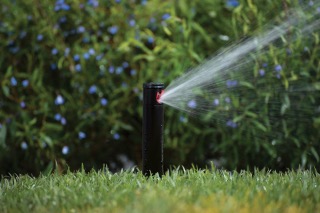
Sprinkler heads that do not pop up fully are definitely a case of insufficient water flow or a mechanical obstruction inside the head. Pop-up sprinklers are made to go out from 2 to 6 inches above the turf level so that they can clear the lawn surface and deliver an even spray pattern. When they only partially pop up, several problems are created: short watering distance, uneven coverage, and increased probability of the head getting hit by mowers. Some of the causes that lead to these situations include debris that builds up inside the head barrel, soil that gets into the head, broken or weakened internal springs, or water pressure that is low in that zone.
Toronto’s soil is one of the reasons for this problem — fine clay particles can readily get into the head mechanism during heavy rain or after the edging has been done. Growing grass around the head can also hold it down, particularly if it was installed too low in the first place. A head that doesn’t fully raise is hardly ever an issue by itself; it usually signifies that there are pressure imbalances, clogged filters, or leaks upstream. Solving the problem of popping up partially will keep both the sprinkler and the surrounding turf from getting more worn out.
4. Water Pooling or Soggy Areas in the Yard
Persistent puddles, soggy areas, or very soft ground around sprinkler heads are the most common signs of an underground water leak. Irrigation lines are always under pressure and even a pin-sized hole in a poly or PVC pipe can emit several litres of water per hour. This water eventually makes the soil very soggy, which causes sinking ground, root rot, and, if it gets to a severe stage, the damage of walkways or foundations. In Toronto’s compact clay soils, water is not able to disperse quickly, thus, leaks become more noticeable through surface pooling and muddy patches.
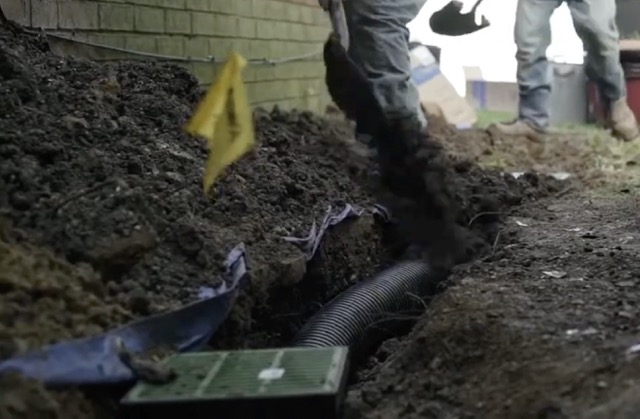
Among the causes are cracked fittings, loosened joints, freeze-thaw pipe damage, or a stuck valve that allows water to seep constantly into the zone. Roots are also a source of problem since it is very common for them to wrap around irrigation lines and thus gradually constrict or crack them. If there is standing water even when the system is off, the valve is probably not sealing properly. The soil saturated with water should not be ignored as it is a risk of structural yard damage and high water bills. It is always good to have early leak detection and repair to be able to rescue the system from a large excavation and make it safe to use again.
5. Higher-Than-Normal Water Bills
If irrigation system breaks underground, it is a sudden and steep rise in monthly water bills which is generally the most neglected sign of the case. In case of underground leaks, small as they may be, the waste of water may go up to hundreds or thousands of litres per billing cycle. Spikes are a common result for Toronto homeowners when a stuck open valve causes continuous low-flow water loss, or when a cracked lateral line leaks each time the zone runs. Often, the homeowners may not detect these leaks visually as the water saturates the soil below the surface before reaching daylight.
Moreover, the malfunctioning of sprinkler heads that spray on sidewalks, driveways, or fences can also lead to an increase in consumption as the system compensates for the loss by running longer to reach the dry areas. Another culprit is the controller, which is programmed incorrectly after a power outage or seasonal adjustment resulting in longer run times or overlapping schedules. Keeping an eye on water usage and comparing it with month-to-month averages is a great way to discover the red flags early. Quick action towards water wastage not only helps to avoid inflated bills but also lessens the burden on the municipal water supply system.
6. Zones That Won’t Turn On or Won’t Shut Off
Generally, when a zone won’t turn on or keeps running even after it should have been turned off, it means that there is a problem with the irrigation system in the electrical or valve area. The solenoid valve is the component of the irrigation system that is controlled electrically and it opens and closes according to the signals sent by the irrigation controller. In case the wiring gets corroded, cut or disconnected (it happens usually after winter frost movement or landscaping), the valve will not be able to activate and the parts of the yard will remain without watering. On the other hand, a stuck solenoid, dirt in the valve, or a broken diaphragm may result in a zone that is continuously open thus the area will be flooded and water consumption will be increased drastically.
The climate of Toronto is the main reason why valves are very susceptible: low temperatures may result in the internal seals getting cracked and the mineral deposits caused by hard water may prevent the parts that move from working smoothly. Moreover, a zone that is not turning off can overwork the pumps and therefore the equipment may fail even if it is running for only a few hours. Checking up on valve problems is done through electrical continuity testing, controller output verification, and component inspection of the valve box. Immediate repair not only saves the water but also the lawn.
7. Sprinkler Heads Spraying in the Wrong Direction
Sprinkler heads that are not rotating properly, spraying onto hard surfaces, or missing their intended coverage areas are most likely a warning sign of mechanical wear or physical displacement. The majority of residential irrigation heads use internal gears or ratcheting mechanisms to keep a precise arc — usually between 0° and 360°, depending on the head type. After a while, grit, sand, or mineral buildup can wear down these gears, resulting in the arc going off. Besides that, the physical impact of lawnmowers, foot traffic, pets, or winter frost heaving can change the head’s orientation or even tilt it in the ground.
If a head sprays in the wrong direction, it is a waste of water on driveways, walkways, fences, or neighbouring properties while the target areas are left without coverage. Continuous misalignment leads to soil erosion risk and it also invites weed growth in dry spots. In Toronto’s climate, the repeated freeze-thaw cycles can move the heads upward or sideways, thus making annual adjustments necessary. It is still a good practice to change worn rotor mechanisms, level the head, and recalibrate the spray arc as a way of restoring water distribution at the right level and preventing turf damage that could become permanent.
Top 7 Signs Your Irrigation System Needs Repair — Before It Gets Expensive