


















Best Shade Plants for North-Facing Toronto Yards
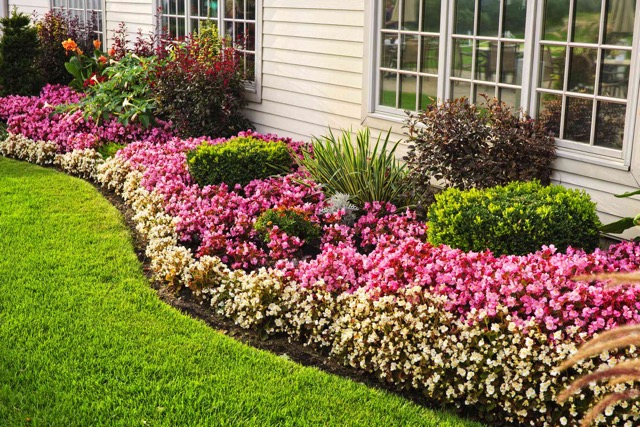
For north-facing Toronto yards, the best shade plants are hosta, fern, astilbe, heuchera, Japanese forest grass, yew, hydrangea, and serviceberry in brighter edges. These plants perform better than sun-loving flowers because they do not need six hours of direct light. The best shade garden is built around foliage texture, not constant blooms.
What Toronto Homeowners Should Know
For north-facing Toronto yards, the best shade plants are hosta, fern, astilbe, heuchera, Japanese forest grass, yew, hydrangea, and serviceberry in brighter edges. These plants perform better than sun-loving flowers because they do not need six hours of direct light. The best shade garden is built around foliage texture, not constant blooms.
Top 10 Shade Plants for North-Facing Toronto Yards
North-facing yards need plants chosen for foliage, moisture tolerance, and lower light, because full-sun flowers usually stretch, thin out, or fail in these spaces.
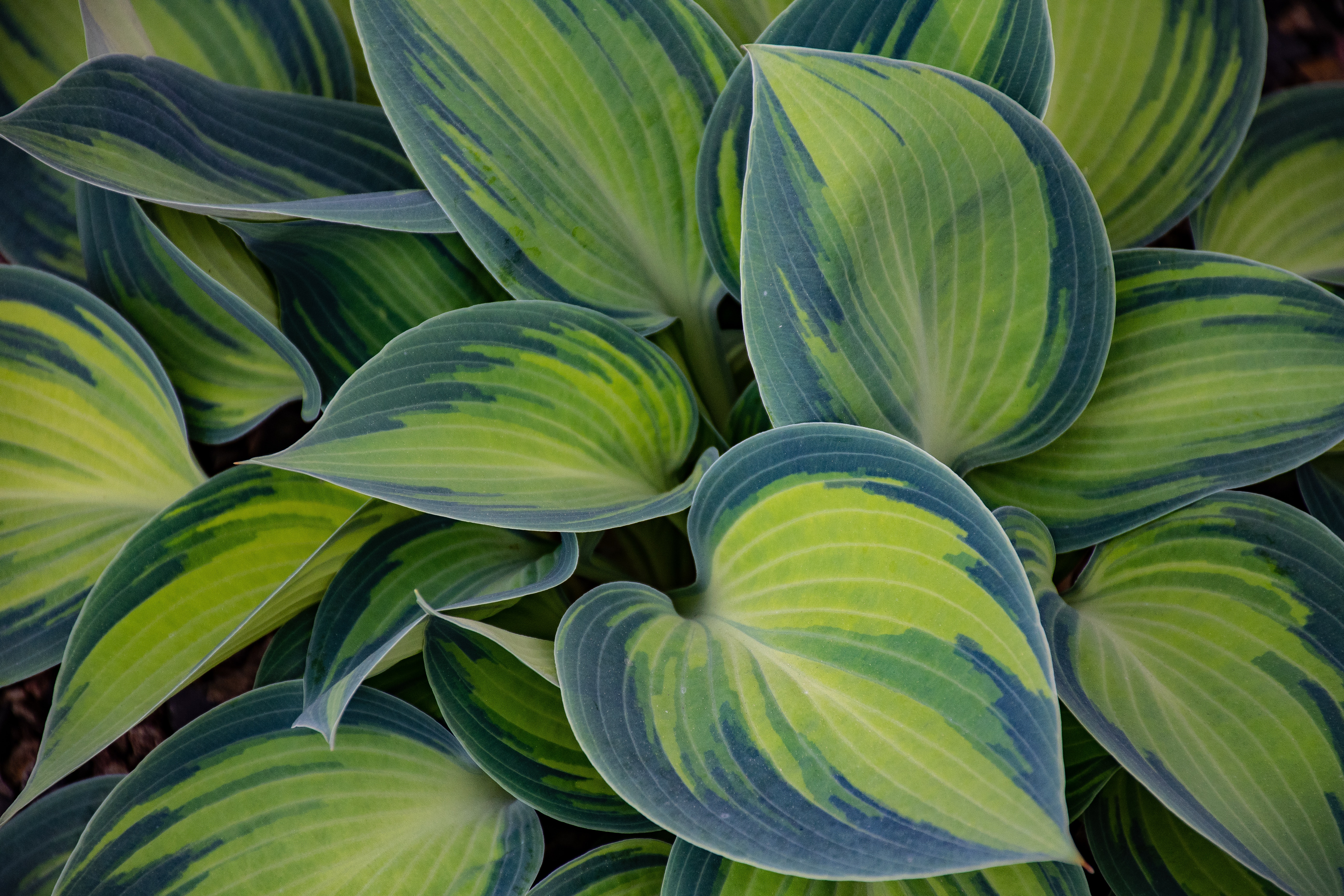
Hosta
Dependable foliage for low-light garden beds.
Hostas are grown for leaf size, colour, and texture more than flowers.

Fern
Fine texture under trees, fences, and shaded walls.
Ferns prefer consistent moisture and leaf-mulch style soil.
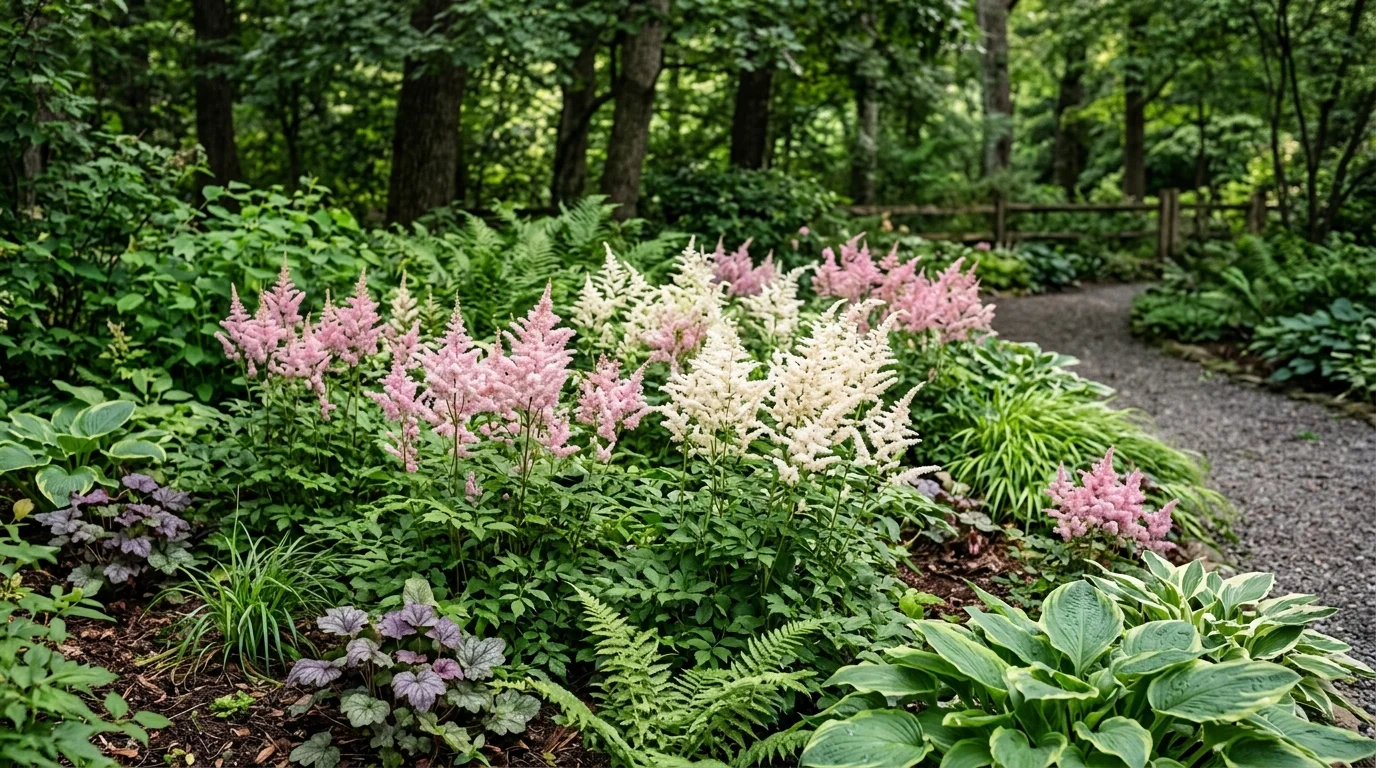
Astilbe
Flower plumes for moist shade and part shade.
Astilbe needs moisture; dry shade causes crispy leaves.
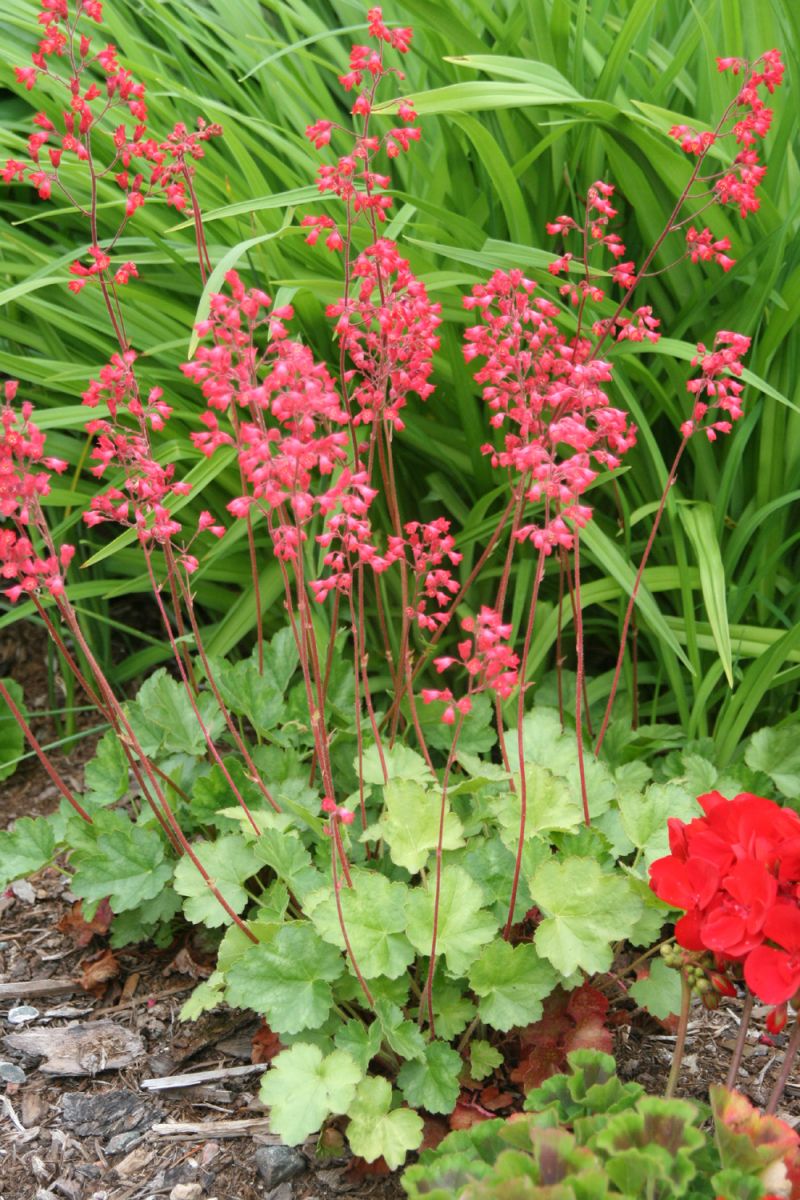
Heuchera
Colourful foliage for small shaded beds.
Leaf colour can range from burgundy to lime, giving interest without heavy bloom.
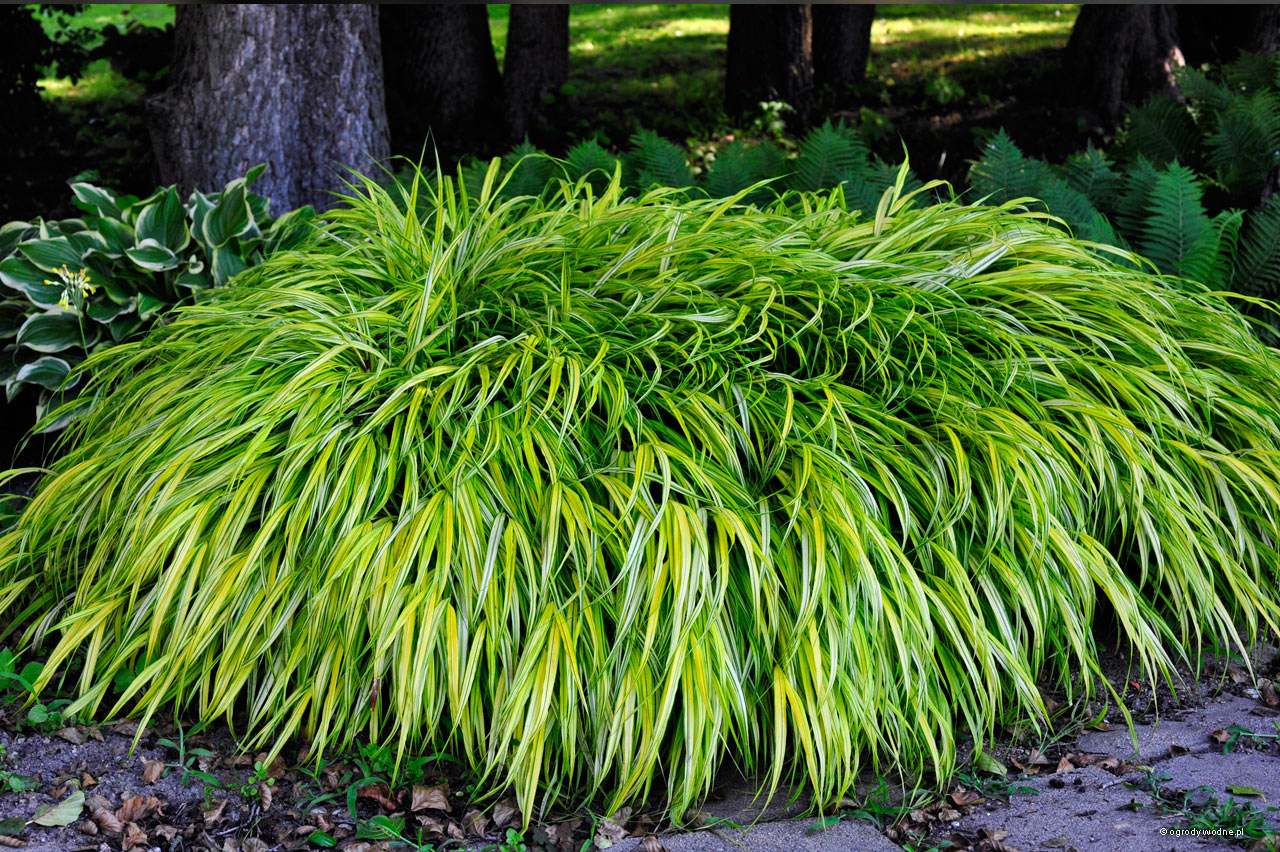
Japanese Forest Grass
Soft cascading texture for elegant shade gardens.
It grows slowly and looks best in repeated clumps.
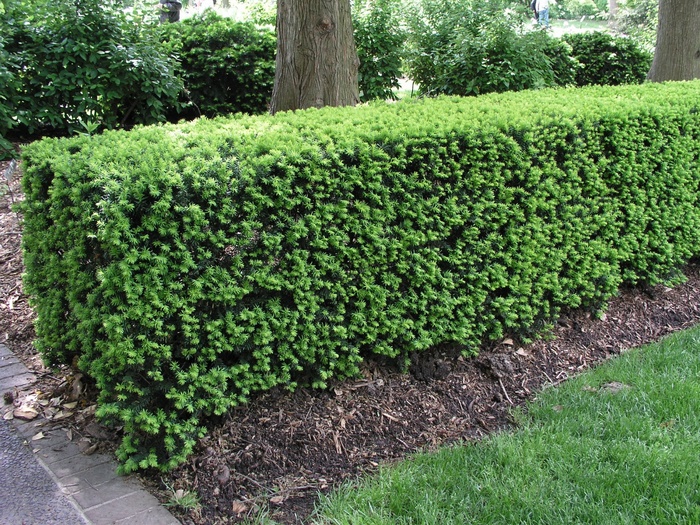
Yew
Evergreen structure where cedars fail from shade.
Yew can be pruned and is more shade tolerant than many evergreens.
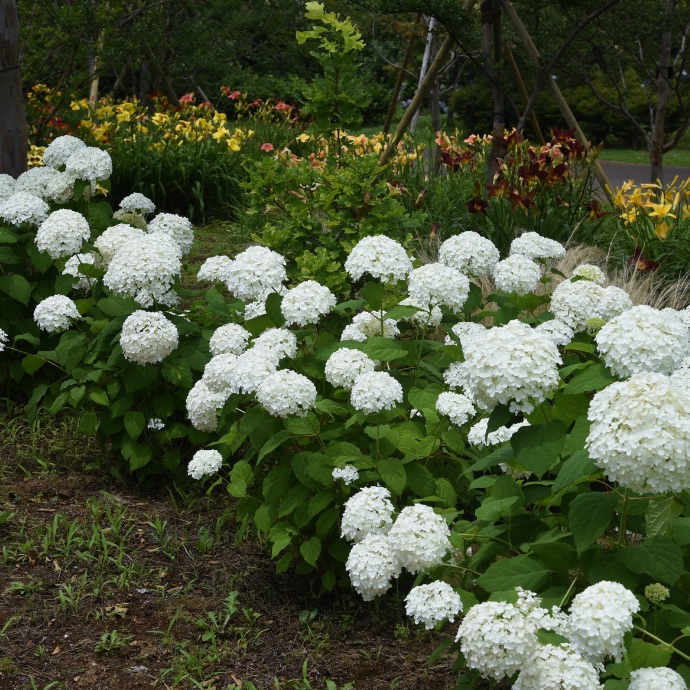
Smooth Hydrangea
Reliable flowering shrub for bright shade.
Annabelle-type hydrangeas bloom on new wood and handle Toronto winters well.
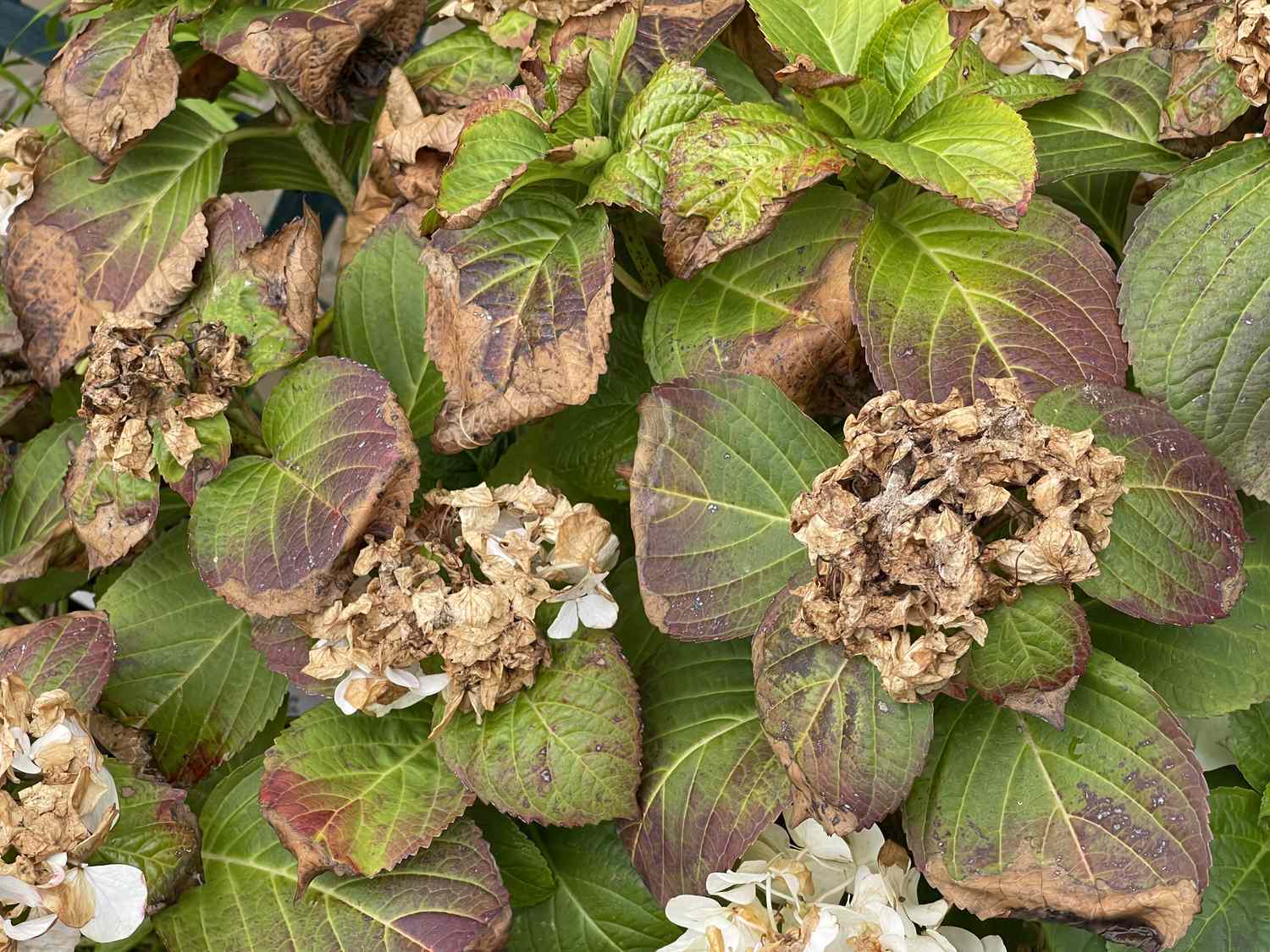
Serviceberry
Small tree for brighter shade edges.
It offers spring bloom, berries, and fall colour.
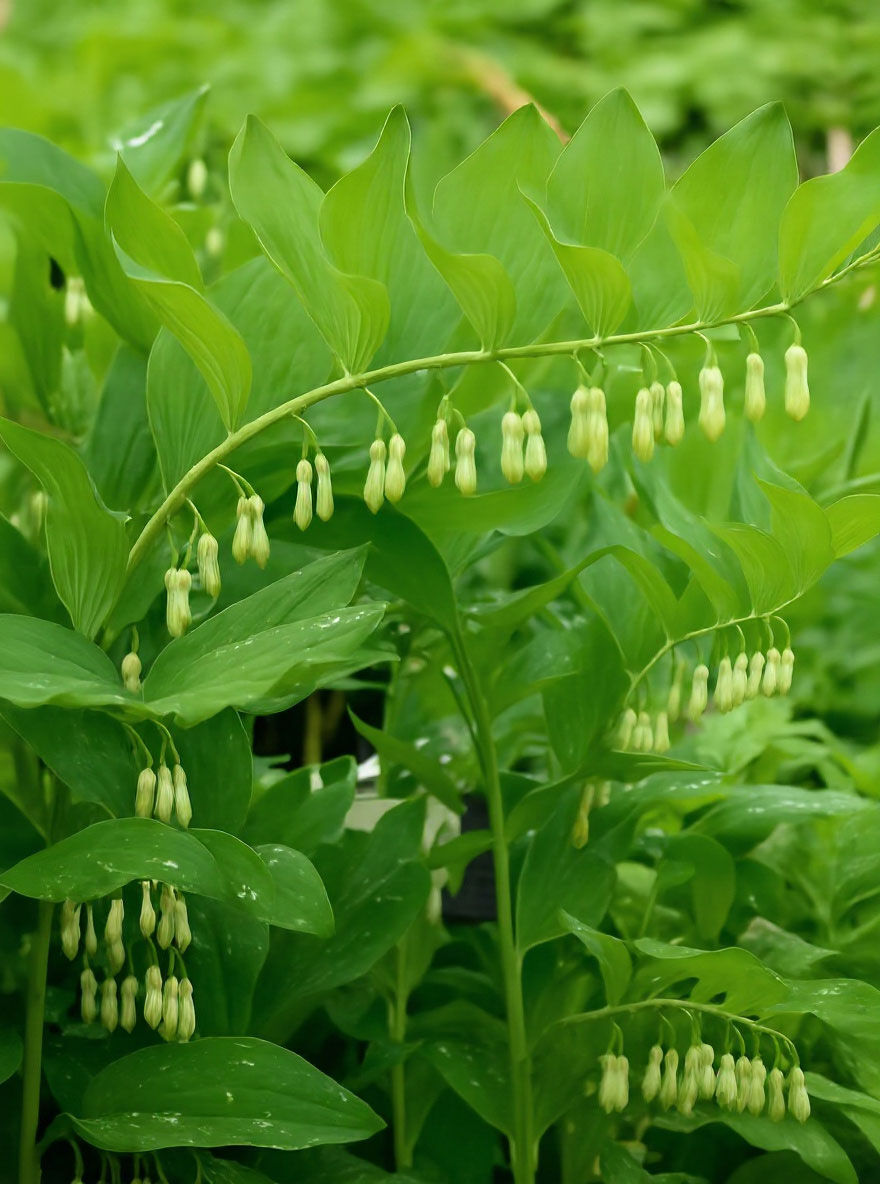
Solomon’s Seal
Arching perennial for natural shade planting.
It spreads slowly and creates graceful woodland texture.
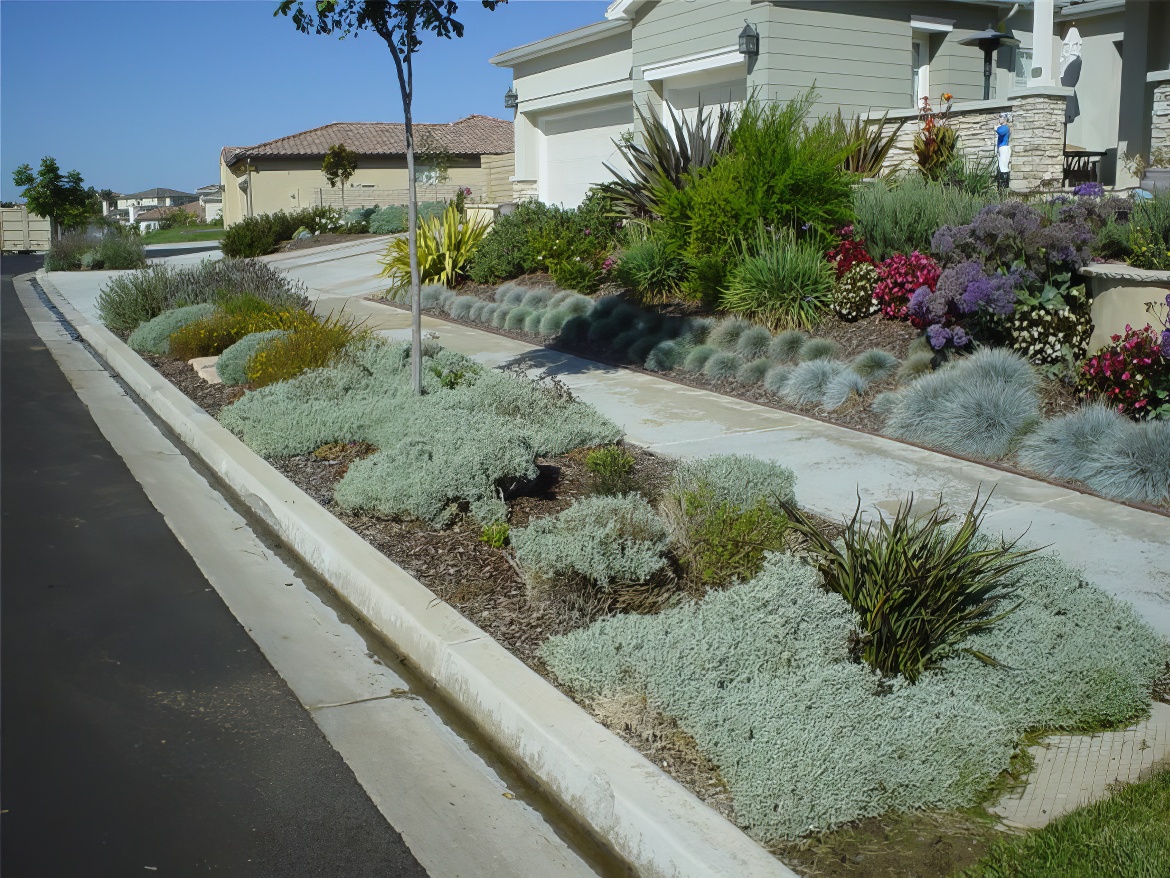
Barrenwort
Groundcover for dry shade once established.
It handles root competition better than many flowering shade plants.
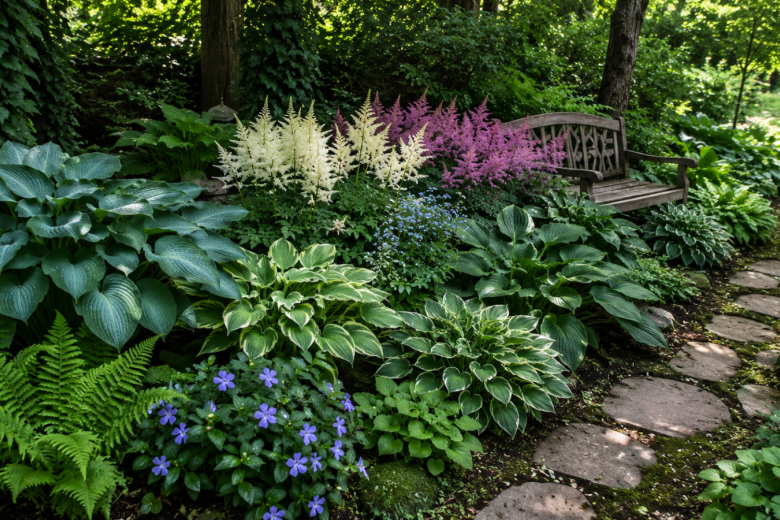
Best fit
Hostas, ferns, astilbe, heuchera, and yew are the most reliable choices for north-facing Toronto gardens. They are adapted to lower light and can create a lush bed even where turf struggles.
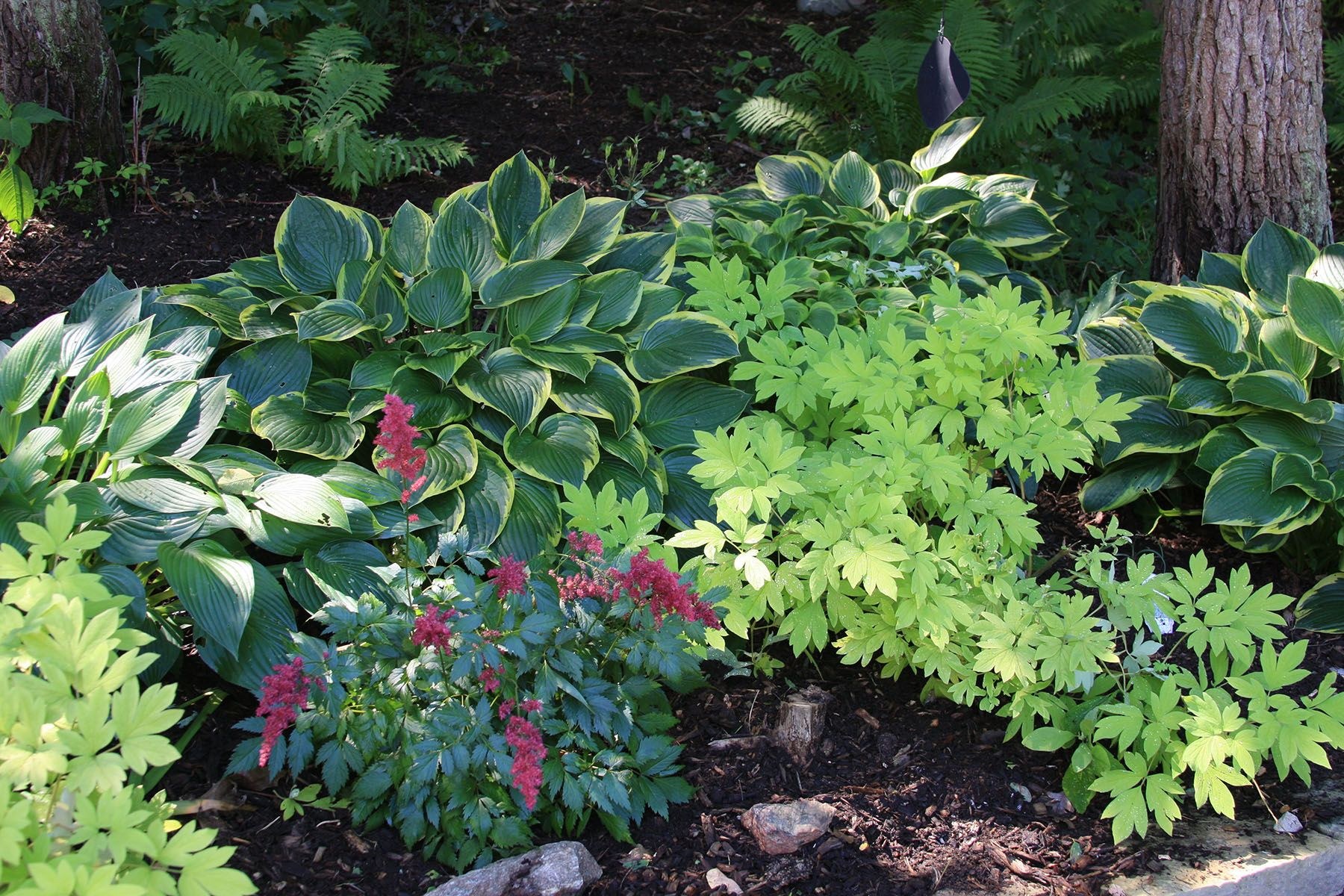
Toronto warning
Yes, shade plants can survive under large trees, but only if root competition is managed. Mature maples and evergreens pull moisture aggressively from the soil, so small perennials planted directly beneath them often dry out.
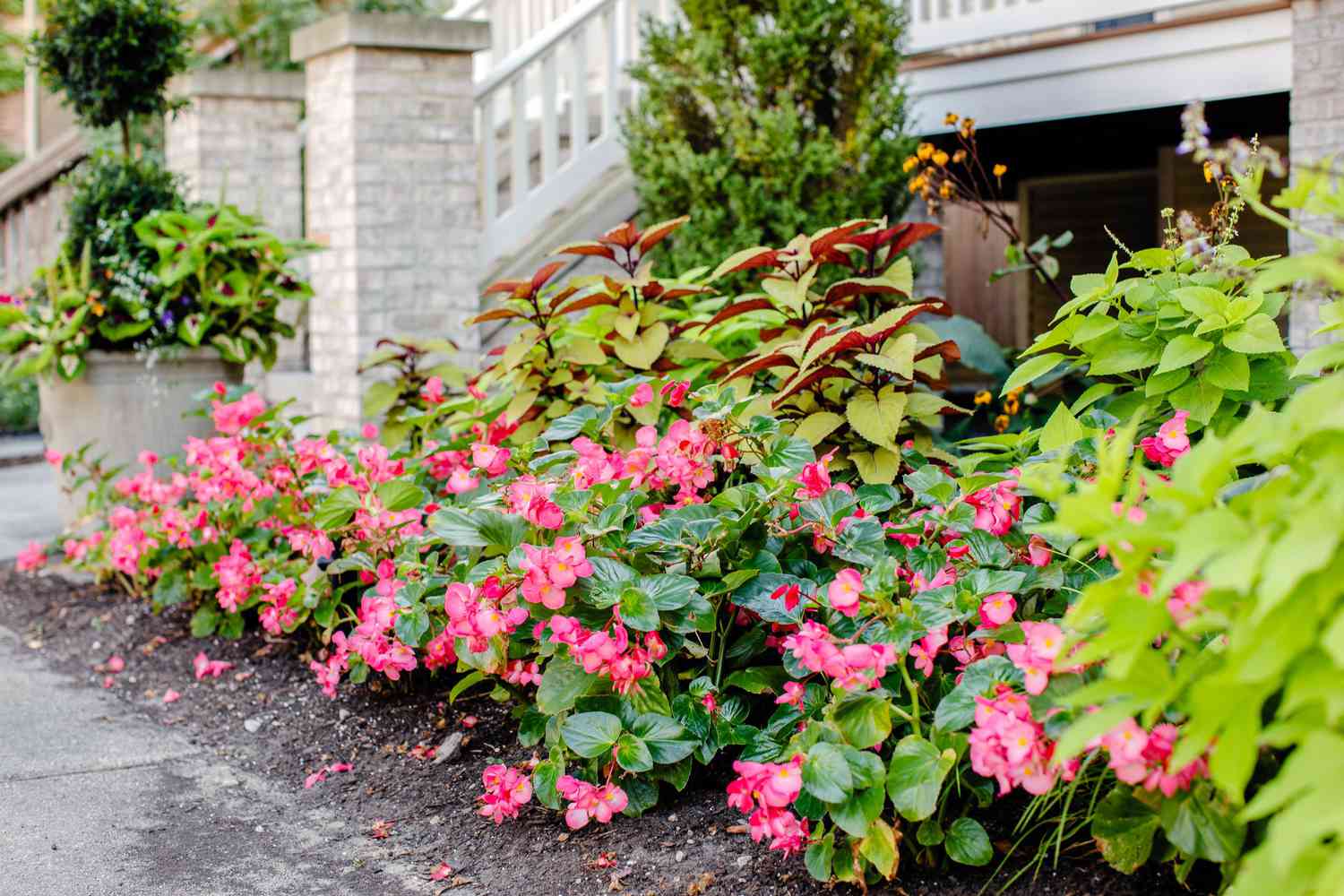
Smart upgrade
Usually yes, a well-designed shade garden can be lower maintenance because plants grow more slowly, weeds are less aggressive, and blooms do not need constant deadheading. The tradeoff is that shade gardens must be planned around texture and seasonal interest instead of bright summer colour.
Common Questions About Best Shade Plants for North-Facing Toronto Yards
What grows best in a north-facing Toronto garden?
Hostas, ferns, astilbe, heuchera, and yew are the most reliable choices for north-facing Toronto gardens. They are adapted to lower light and can create a lush bed even where turf struggles. Hydrangeas may work if the site has bright shade or morning sun, but they bloom less in deep shade. The key is to design for foliage contrast: large hosta leaves, fine fern texture, burgundy heuchera, and white astilbe plumes. Trying to force lavender, coneflowers, or ornamental grasses into shade usually leads to weak plants and disappointing flowers.
Can shade plants survive under large trees?
Yes, shade plants can survive under large trees, but only if root competition is managed. Mature maples and evergreens pull moisture aggressively from the soil, so small perennials planted directly beneath them often dry out. The better approach is to plant in pockets between roots, improve soil carefully without burying tree trunks, and use mulch to reduce evaporation. Ferns and hostas are good starters, but even shade plants need watering during establishment. If the area is extremely dry, yew, barrenwort, and tougher groundcovers usually perform better than flowering perennials.
Is a shade garden lower maintenance than a sunny flower bed?
Usually yes, a well-designed shade garden can be lower maintenance because plants grow more slowly, weeds are less aggressive, and blooms do not need constant deadheading. The tradeoff is that shade gardens must be planned around texture and seasonal interest instead of bright summer colour. Toronto north-facing beds also stay wet longer in spring, so drainage matters. Use mulch, avoid overcrowding, and choose plants by mature size. A shade bed with hosta, fern, astilbe, yew, and hydrangea can look full and calm with less weekly work than annual flowers.
Practical Planting Details for Toronto and the GTA
| Item | Typical Answer | Why It Matters |
|---|---|---|
| Best foliage | Hosta and fern | Use this as the starting point, then adjust for sun, soil, drainage, access, and mature plant size. |
| Best flower | Astilbe | Use this as the starting point, then adjust for sun, soil, drainage, access, and mature plant size. |
| Evergreen option | Yew | Use this as the starting point, then adjust for sun, soil, drainage, access, and mature plant size. |
| Common mistake | Forcing full-sun plants into shade | Use this as the starting point, then adjust for sun, soil, drainage, access, and mature plant size. |
Choose Plants by Category
For installation, spacing, soil preparation, mulch, edging, and aftercare, connect this planting plan with planting services in Toronto, full landscaping, mulch and river rock installation, and irrigation services so the plants are not only selected well, but installed and watered correctly.