1. How Much Water Can a Smart Irrigation Controller Save in Toronto?
Efficient irrigation systems with smart technology have the potential to cut outdoor water use in Toronto by 20–35%. The exact reduction depends on factors like yard size, soil type, and plant density. Data from the U.S. EPA WaterSense program reveal that weather-based controllers typically save between 2,000 and 4,000 gallons of water per household annually by not watering unnecessarily. Toronto has variable rain patterns—periods of drought are followed by heavy rain—and therefore fixed timers are less effective. A smart controller determines operating hours by taking into account the current weather forecast, recent rainfall, evapotranspiration (ET), and soil moisture. In the case of typical suburban homes in Toronto with 4–10 irrigation zones, such a cut converts into $90–$180 of annual water cost savings, the extraction rates varying. The most significant savings happen in July and August when the lawns need the most water but thunderstorms occur frequently. By not watering on days when Mother Nature provides, smart controllers reduce waste to a great extent and also help in the continuous functioning of irrigation parts for a longer period of time.
2. What Makes Smart Irrigation Controllers More Efficient Than Traditional Timers?
Traditional irrigation timers are based on fixed schedules and do not interact with the weather in any way. Therefore, if it rains at night, the system will still work at 6 AM and liters will be wasted without the owners even knowing. Intelligent controllers use weather data, humidity, temperature, wind speed, and rainfall measurements to decide the amount of water daily. Some devices measure ET (evapotranspiration) which can determine the exact amount of moisture that the grass loses per day. ET-based scheduling alone can be responsible for up to 30% reduction in water use for irrigation. In addition to these features, smart controllers are also equipped with rain skip, wind skip, freeze protect, and seasonal adjustment features that allow the system to be automatically reprogrammed when the weather changes. In other words, Toronto homeowners are often guilty of leaving their irrigation system working at full capacity during cool days of spring or rainy periods of fall, thus causing oversaturation and fungal disease. If a smart controller is used, the time of irrigation will be automatically reduced in April–May and September–October, thus efficient and evidence-based irrigation will be performed which is tailored to Toronto’s climate and native soil conditions.
3. How Do Weather-Based and Soil-Sensor Controllers Compare?
Smart controllers come in two main categories: weather-based (ET) and soil-moisture-based. Weather-based systems monitor temperature, humidity, wind, and rainfall—ideal for Toronto’s fast-changing weather. They save 20–35% water on average. Soil-sensor systems measure real moisture levels in the ground and instruct the controller when watering is needed. These save slightly more—up to 40%—but require sensor installation in key areas and may need periodic recalibration. Weather-based controllers work best for lawns and large landscapes. Soil-moisture sensors are excellent for garden beds, shrubs, cedars, and drip irrigation lines, where soil conditions vary more. A hybrid setup (weather-based controller + soil sensors on selective zones) delivers the highest efficiency. Toronto’s clay-dominant soil holds moisture longer, meaning soil sensors can reduce watering cycles by 2–3 times per week during early summer.
4. Which Irrigation Controller Is Best? (Toro vs. Orbit vs. Rain Bird vs. Hunter Comparison)
Brand
Weather Intelligence
App Control
Zones
Typical Water Savings
Price Range
Toro Evolution / Tempus
Strong ET + rain skip
Good
4–16
20–30%
$$
Orbit B-Hyve
ET + weather feed
Excellent
6–12
20–30%
$
Rain Bird ESP-ME3 / ARC
ET + advanced seasonal adjust
Excellent
4–22+
20–35%
$$
Hunter Hydrawise (HC/Pro-HC/PX3)
Predictive watering + ET + Flow meter
Best
6–36
25–40%
$$$
Toronto irrigation installations generally give the highest rating to Hunter Hydrawise on the basis of features as it is the one that uses the most advanced predictive watering. This is the only system reviewed that takes into account the probability of rainfall, wind speed over 25 km/h, and expected ET loss. Besides, it is the only one to offer flow-meter monitoring, which can detect leaks at the instant. Rain Bird is a top performer in multi-zone residential systems (10–22 zones), thus, it is a good compromise between cost and features. Toro is a strong and a great small–medium home’s type solution, however, it doesn’t have the predictive algorithms Hunter has. Orbit B-Hyve is the least expensive option that still manages to save about 25% water if it is set up correctly. So, in most cases, Toronto properties can expect Hunter to be their highest long-term savings source because of its accuracy and reliability.
5. How Do Smart Controllers Adjust Watering in Toronto’s Four Seasons?
Toronto experiences considerably changeable weather with a rainy spring, hot summers, and rather unpredictable autumn. Seasonal adjustment is the method through which smart controllers change the operation time automatically. In April–May, the watering of lawns is only 30–50% of what is necessary in the peak of summer. Traditional timers are very seldom changed which is the main reason for the waste of water. In July–August, when the temperature is very often over 27–30°C, controllers extend the irrigation time according to ET calculations. During the rainy fall weeks, irrigation is reduced by 60–80% because the soil remains naturally moist. Freeze-protect settings stop irrigation when the temperature is less than 3°C, thus avoiding system damage and the giving of water which is not needed. Such automation guarantees that the system will be efficient all the time of the year without the need of the homeowners to remember that they should reprogram their systems themselves.
6. How Much Money Can Homeowners Save Annually With a Smart Controller?
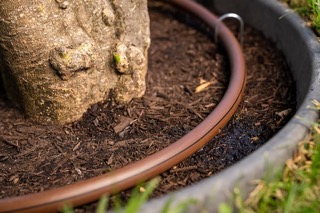
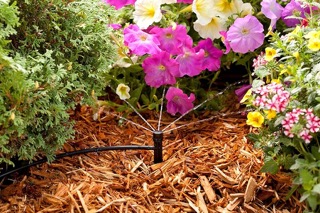
Toronto families, on average, put between $300 and $600 into outdoor watering activities per season. This range varies depending on the size of the lawn and how often it is watered. Annual water bills can be cut by $60-$180 with the help of a smart controller that saves 20-35%. For bigger areas with 10-20 zones, the saving can be more than $250 per season. The use of drip irrigation in gardens or flower beds makes the situation better for the homeowners. This is because the scheduling of drip irrigation can cut the wastage of those zones by 50% only. So, in a period of 5 years, the money saved is usually between $600 and $1,000, which is more than the cost of the controller and its installation. The savings become 10-20% higher when efficient nozzles (e.g., Rain Bird HE-VAN or MP Rotators) are used along with the smart controller, resulting in a total reduction of up to 45%.
7. Do Smart Irrigation Controllers Extend the Lifespan of Irrigation Systems?
Yes. By reducing unnecessary watering cycles, smart controllers decrease system strain. Fewer run cycles mean valves open and close less frequently, reducing wear on solenoids. Lowered water pressure spikes reduce the chance of PVC or poly pipe bursts, especially during high-demand summer weeks. Avoiding overwatering prevents head erosion and soil displacement around sprinkler bases. Smart systems detect leaks or abnormally high flow and send alerts—preventing the loss of hundreds of liters per hour. Over a decade, proper scheduling and reduced water hammer can extend system longevity by 20–30%, lowering repair costs.
8. How Do Smart Controllers Improve Plant Health?
Underwatering stresses turf, while overwatering suffocates roots and increases fungal disease. Smart controllers deliver precisely measured irrigation, improving turf density by 10–20% within a season. They adjust watering for temperature spikes, preventing drought stress during heatwaves. In gardens, moisture-regulated watering improves growth for hydrangeas, cedars, perennials, and fruiting shrubs. ET-based watering reduces the chance of fungal outbreaks by up to 40% because soil stays within optimal moisture levels. Plants grow deeper roots, improving drought resilience and reducing the number of irrigation days required.
9. Are Smart Controllers Difficult to Install or Maintain?
Almost all modern controllers are basically compatible with Toronto’s standard irrigation (Hunter, Rain Bird, Toro, Orbit) components. A Wi-Fi-enabled unit can be easily configured by using a mobile app. Usually, the installation duration is between 45 minutes to an hour and a half for an already existing system. Smart control devices do not need much attention other than making sure that they are connected to Wi-Fi. Updates to the firmware gradually increase the precision of the device. For instance, a few such as Hunter Hydrawise, are equipped with an on-board diagnostic system that detects and notifies the user of the malfunction of the wiring or inactive solenoids.
10. Should Every Toronto Homeowner Switch to a Smart Controller?
Yes, definitely, the pay-off is obvious for any house equipped with an irrigation system. Water savings in the range of 20–35%, decreased electricity or gas bills, less soil washing away, and more vibrant lawn are some of the reasons why smart controllers are considered the best upgrade to a home. Fixed timers are no longer functional due to Toronto’s ever-changing weather. Smart controllers adjust watering every day of the year automatically. The majority of homeowners will see their installation costs returned in 1–2 seasons. Smart controllers, when combined with a professional service for spring opening and fall closing, are the most efficient and reliable in the long run.
How Much Water Can a Smart Irrigation Controller Save in Toronto?